
Mary Tyler Moore: Famous Needlepointer
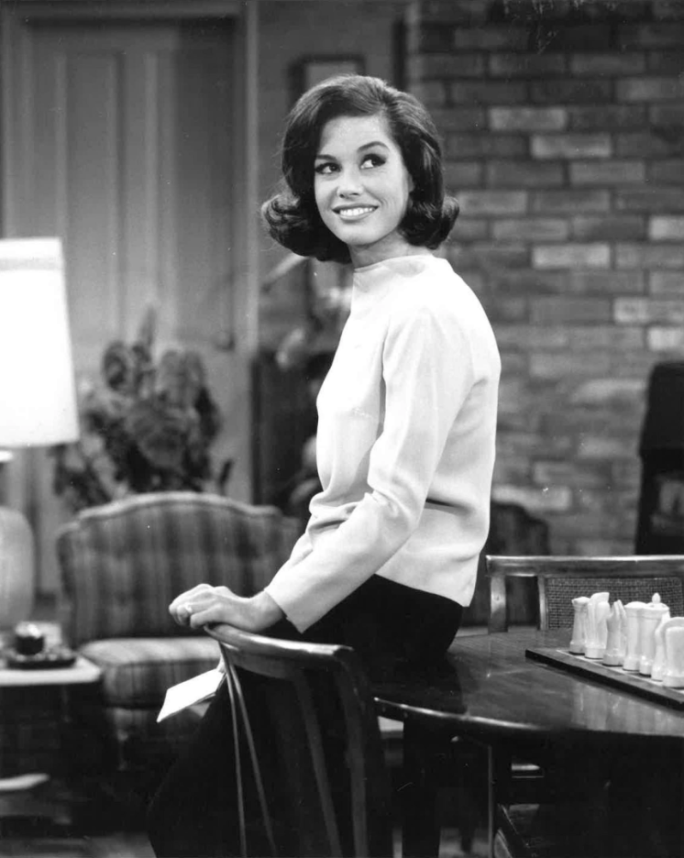
Everyone remembers the hat toss. The smile that turned the world on, the newsroom, the seven Emmys lined up on the shelf. What most people never knew is that between all of it, Mary Tyler Moore was quietly building one of the most impressive needlepoint résumés in Hollywood.
Twenty-three finished pillows in three years. While starring in every scene of her own weekly show. If you have ever felt guilty about your unfinished canvas pile, look away now. Or better, keep reading. She is one of us, and she makes us all look like we are standing still.
It Started on Set
Mary was initiated into needlepoint on the set of The Dick Van Dyke Show around 1963, and the needle never left her hands again.
Her first project was an ambitious one for a beginner: an evening bag worked in dark brown, which anyone who has stitched dark thread on dark canvas knows is its own special kind of punishment. "I was working in dark brown, which, as you know, is very hard because you can't see the stitches very well," she said. "I almost went blind, and, in fact, that's how I had to wear glasses. But I just fell in love with it." She loved that bag so much she later stitched a larger version, this time with a white background behind the cabbage rose and leaves. A do-over, but make it bigger. We respect it enormously.
Stitching Around a Shooting Schedule
By the time she was headlining her own series, Mary was in every scene, on set all day, every day. So most of her stitching happened at night. But she found her windows. "One day a week, Thursday, is camera day and we do the scene once, then leave while the cameras block the scenes, and that's a time for me to needlepoint." While the crew moved cameras around the WJM newsroom, Mary was in a corner with her canvas.
And when she committed to a project, she committed. "When I get involved in a project, I go at it furiously," she confessed. "With this set of pillows, for instance, I don't think I've read a newspaper in four months."
She described the pull of needlepoint the way so many of us would. "There's something very relaxing about needlepoint for me. I guess it's the same satisfaction that one gets from sculpting or painting in that it's an art form, with a degree of self-expression, a combination of art and craft. And it's lasting, I love that, and nothing is ever going to hurt it. Most important, it's what I give to my home."
Nothing is ever going to hurt it. Frame that.
The Pillows
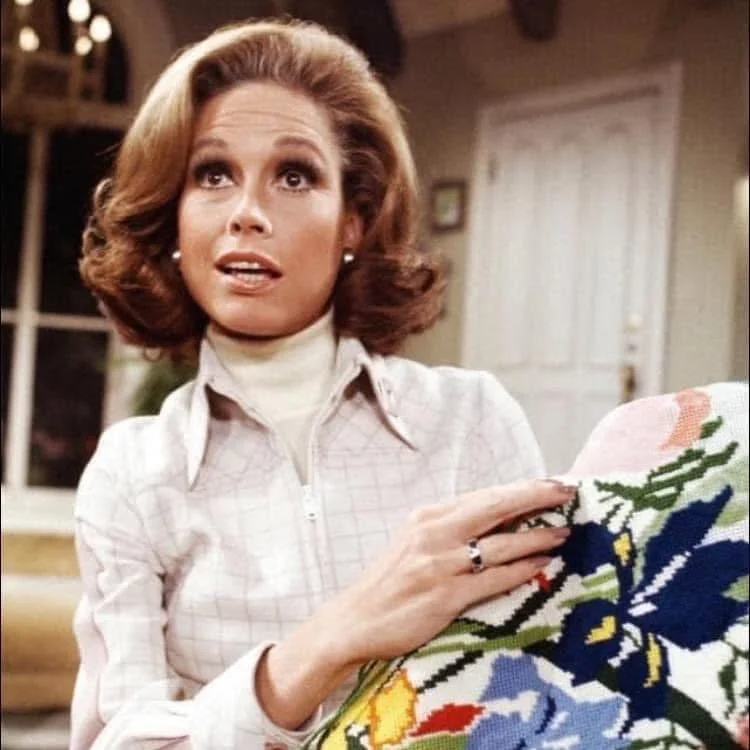
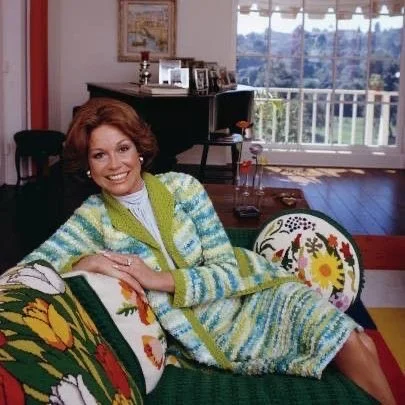
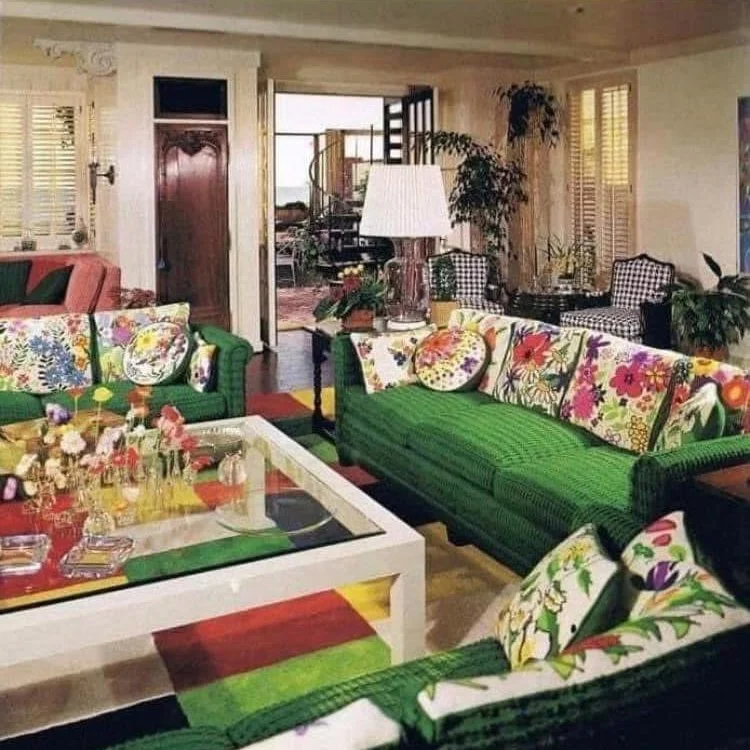
The set of pillows that ate four months of newspapers was no small undertaking. Ten pillows planned, each one a different approach in the same riotous palette: vivid yellows and oranges, shocking pinks and purples, and three shades of green she rattled off like paint chips she knew by heart. Poison apple, forest, and kelly. All ten to be backed, lined, and tasseled alike. At the time she described them, five were already done.
"I think they'll be handsome," she said. An understatement from a woman whose home was, at that point, essentially a gallery of her own work.
The House That Needlepoint Built
Here is our favorite part. When Mary and her husband remodeled their Malibu home, her needlepoint was not the finishing touch. It was the starting point. Her interior designer built the color palette of the house around her pillows. The paint matched the needlepoint, not the other way around.
Most of us pick a canvas to match the couch. Mary picked the walls to match the canvas. That is the correct order of operations, and we will be citing her as precedent forever.
The Honeybee Purse That Went Everywhere
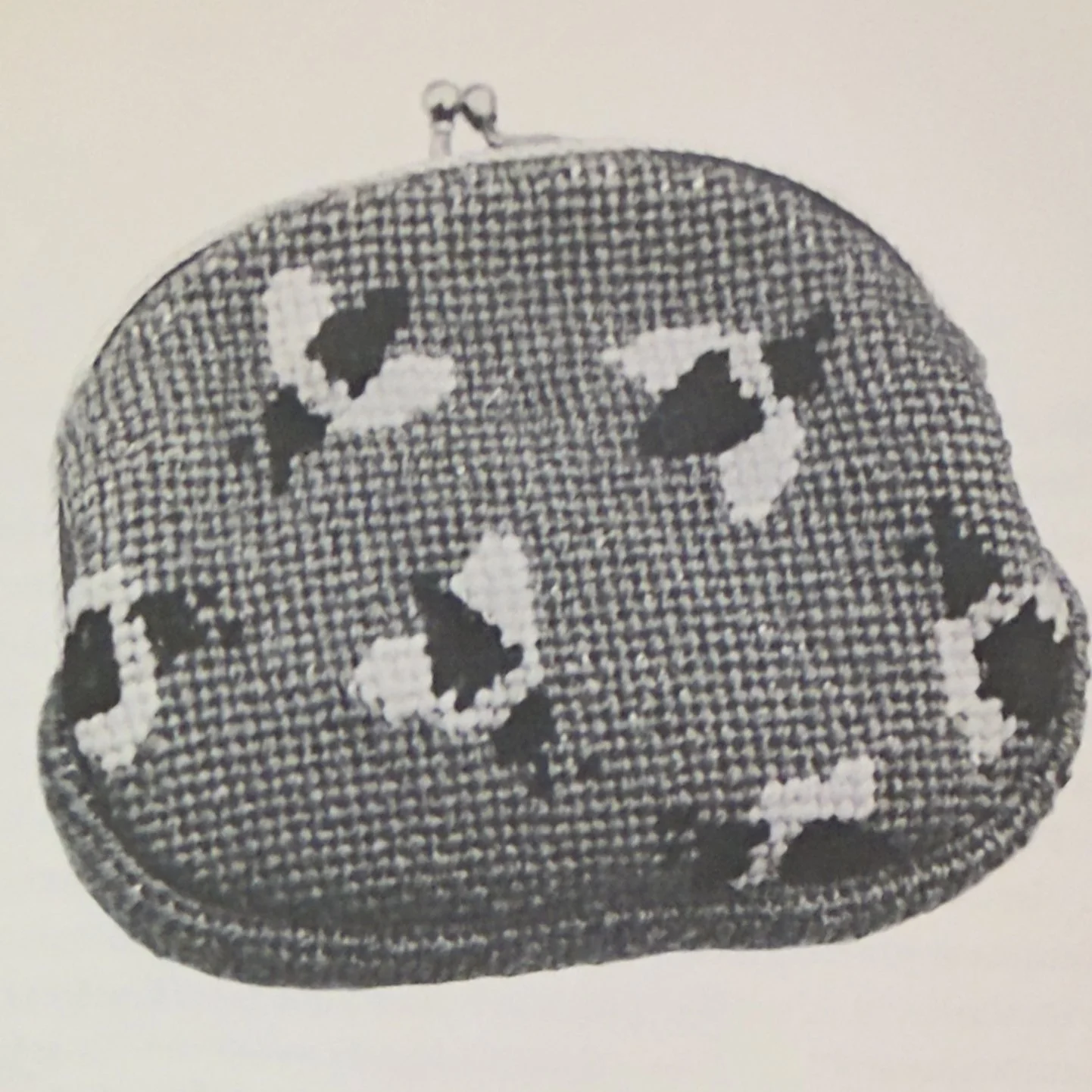
Her favorite piece of all was a small one. A French coin purse designed by Jebba, Inc. of Los Angeles, covered in yellow, gold, and black honeybees alighting on a green background, designed with an extra gusset for a little more room. Four by five inches, stitched in basketweave on No. 12 mono canvas, a finer mesh than the No. 10 she usually worked on. She carried it with her everywhere.
It took her one week to finish. "I work very quickly," she said. Understatement of the decade.
A Giver, Too
Like every needlepointer we know, Mary could not keep it all for herself. She stitched a coin purse and an eyeglass case for her mother, covered in orange and yellow ladybugs. And for her husband, she made a belt built around a wonderful old brass buckle from a Civil War uniform, with a camouflage pattern designed around it in shades of brown, beige, and olive green. "It's really great looking," she said, "and the first thing I've done just for him."
The Dining Room Chairs
Every stitcher has the project that lives in the back of their mind. For Mary, it was the proverbial dining room chairs. "But that's such a commitment," she admitted. "You can say, I'm going to do ten pillows and stop at seven. But once you start those dining room chairs, you've got to finish them."
Her vision: one HUGE flower in the center of each chair. Perhaps a giant daisy in one, a peony in another, a dandelion in a third, all on the same background. Then reality set in. "Unless you had some elves hidden somewhere to do the background stitches for you..." Her voice trailed off at the enormity of it.
Mary. Same.
One of Us
Seven Emmys. An Oscar nomination. A career that changed what women got to be on television. And through all of it, a needle in her hand, a purse full of honeybees, a house painted to match her pillows, and a dining room chair dream she never quite let go of.
Mary Tyler Moore was a needlepointer. Twenty-three pillows deep. One of us.
Sources: Celebrity Needlepoint by Scoobey and McGrath; https://needlepointgateway.com; https://clickamericana.com; Doyle Auction House