
Beginner Needlepoint: The Mini Craft That Turns Into an Obsession
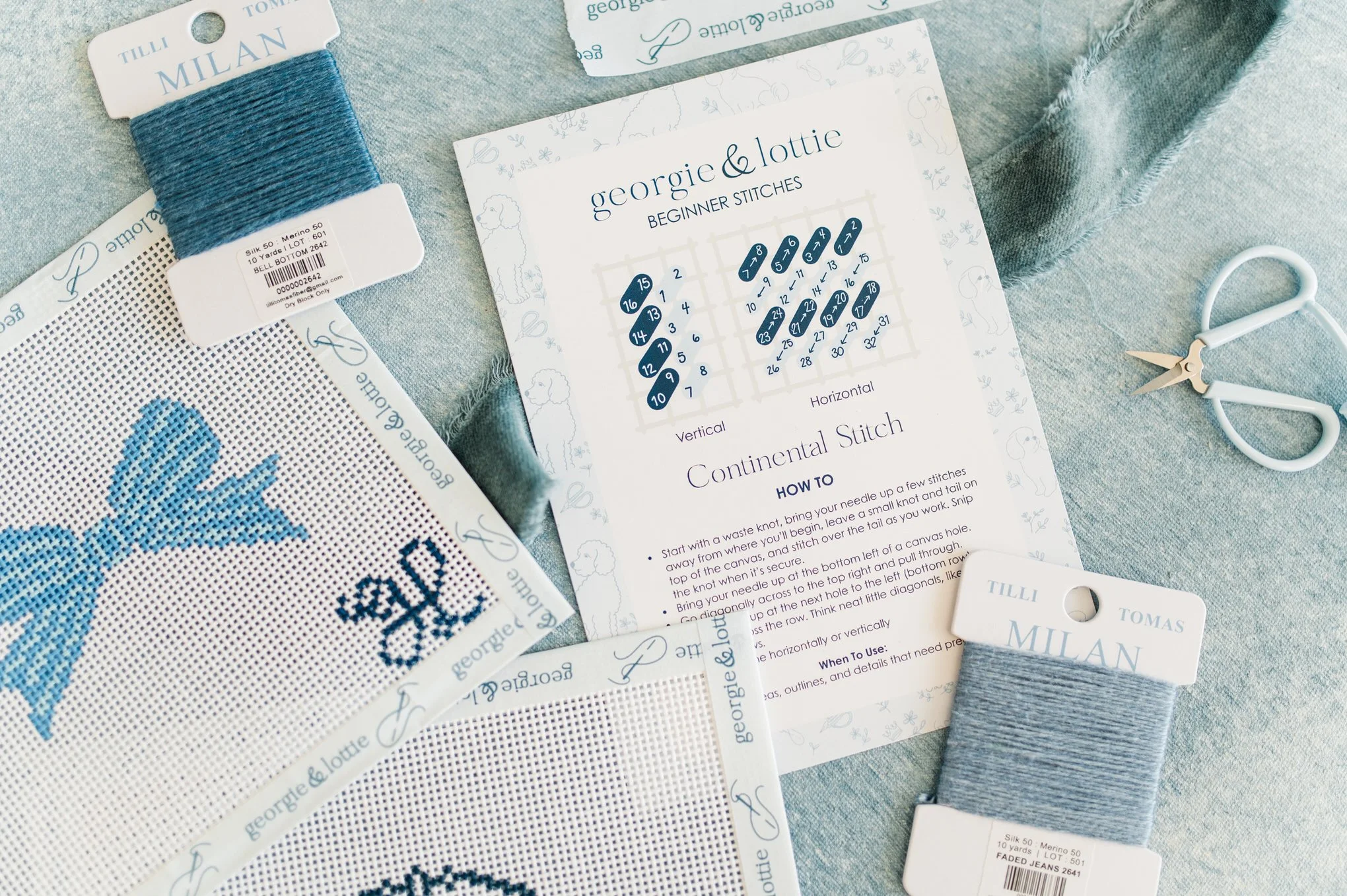
You weren’t planning on picking up a new hobby. And yet here you are, googling “beginner needlepoint” at some unreasonable hour, a little glass of something beside you, completely unbothered by how far down this rabbit hole you’ve already fallen.
Good. Welcome.We’ve been expecting you.
Here’s the thing about needlepoint: no one stumbles into it accidentally and leaves. You either bounce off it immediately (usually because someone handed you the wrong canvas) or you are, as of right now, a stitcher for life. The fact that you made it to this blog post suggests you’re firmly in column B. Congratulations. Your Saturday mornings will never be the same.
Mini crafts are having a genuine cultural moment, and we’d like to take a small amount of credit. People are tired of projects that take six months and produce something they’re lukewarm about. They want a win. A fast, beautiful, hold-it-up-in-good-lighting win. And a well-chosen beginner needlepoint canvas is exactly that. It’s the most satisfying thing you can do with your hands that doesn’t require a kitchen or a contractor.
Why Small Is the Smartest Place to Start
There is a specific type of beginner mistake that kills a hobby before it has a fighting chance, and it is starting too big. The ambitious canvas. The complicated twelve-color design. The one that was stunning in the shop and is currently judging you from your craft table.
We love the ambition. We also love you enough to tell you to put it down.
A mini needlepoint canvas (palm-sized, one glorious motif, clear lines, a subject with some personality) is where real confidence gets built. You learn to thread your needle, manage your tension, and find the rhythm of stitching without also trying to manage scope creep. Because the canvas is small, you actually finish it. You hold it in your hands, you feel the wool, you look at what you made, and something in your chest does a whole thing.
That feeling is the point. The entire point. It’s also mildly addictive, which we consider a feature.
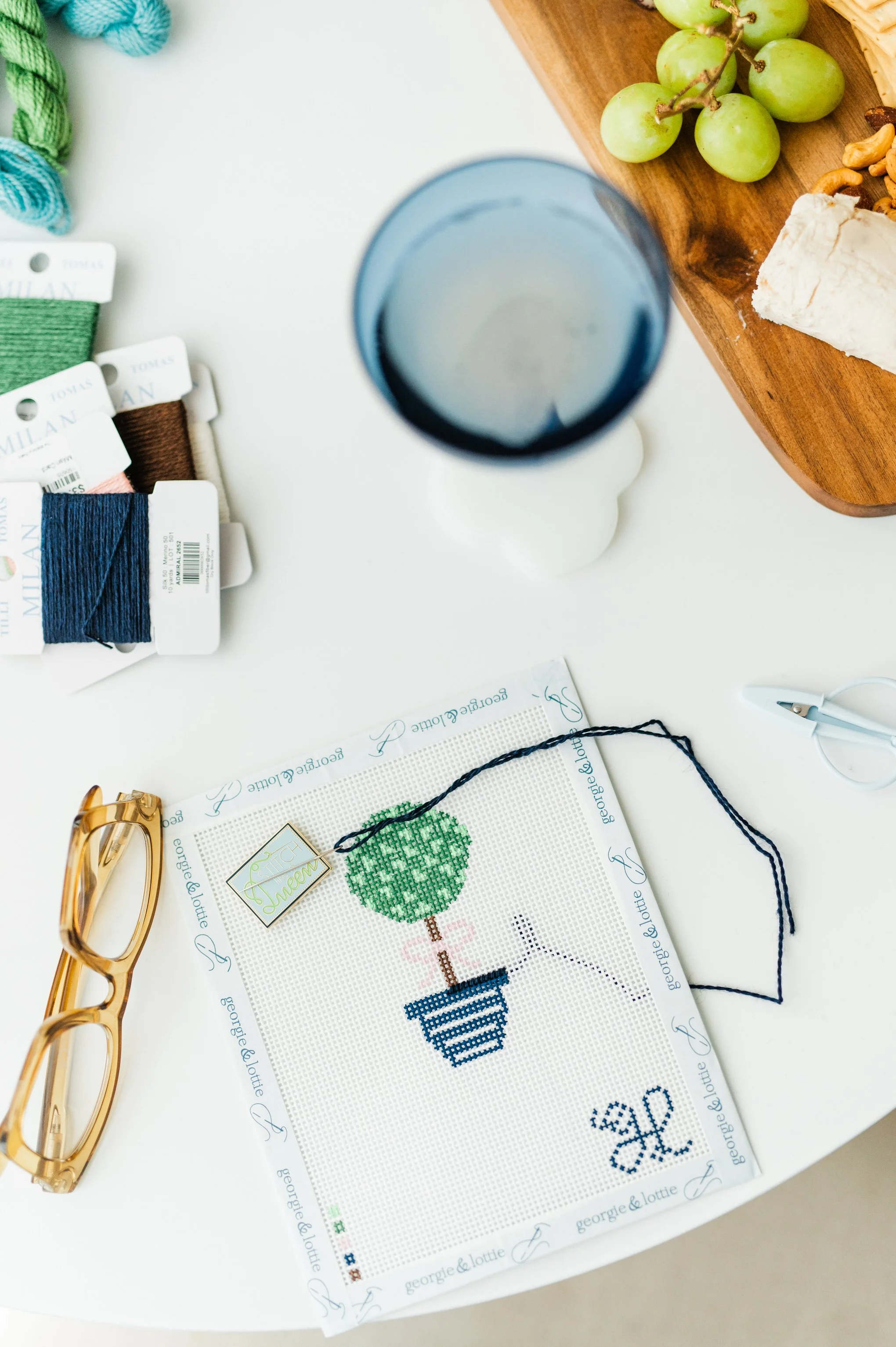
What to Look for in a Beginner Canvas
Not every canvas is designed with the beginner experience in mind. Some of them will absolutely eat you alive, and we say that with complete affection. Here’s what separates a great first canvas from a cry-into-your-thread situation:
A bold, clear design. Bold lines. Defined shapes. A motif with personality but not so much going on that you need a magnifying glass and a snack break every twenty minutes. A strawberry. A monogram. A lemon with strong opinions. You want to see exactly what you’re stitching and feel genuinely delighted about every section you fill in.
13-mesh canvas. Mesh count is the number of holes per inch on your canvas, and for beginners, 13-mesh is the move. It’s substantial enough to work with comfortably, gives your stitches beautiful presence, and produces a finished piece that looks like something rather than a homework assignment. Browse our 13-mesh canvas collection and you’ll see exactly what we mean. Anything finer than 18-mesh is a conversation for after you’ve completely fallen for the craft. (You will. We’re just managing the timeline.)
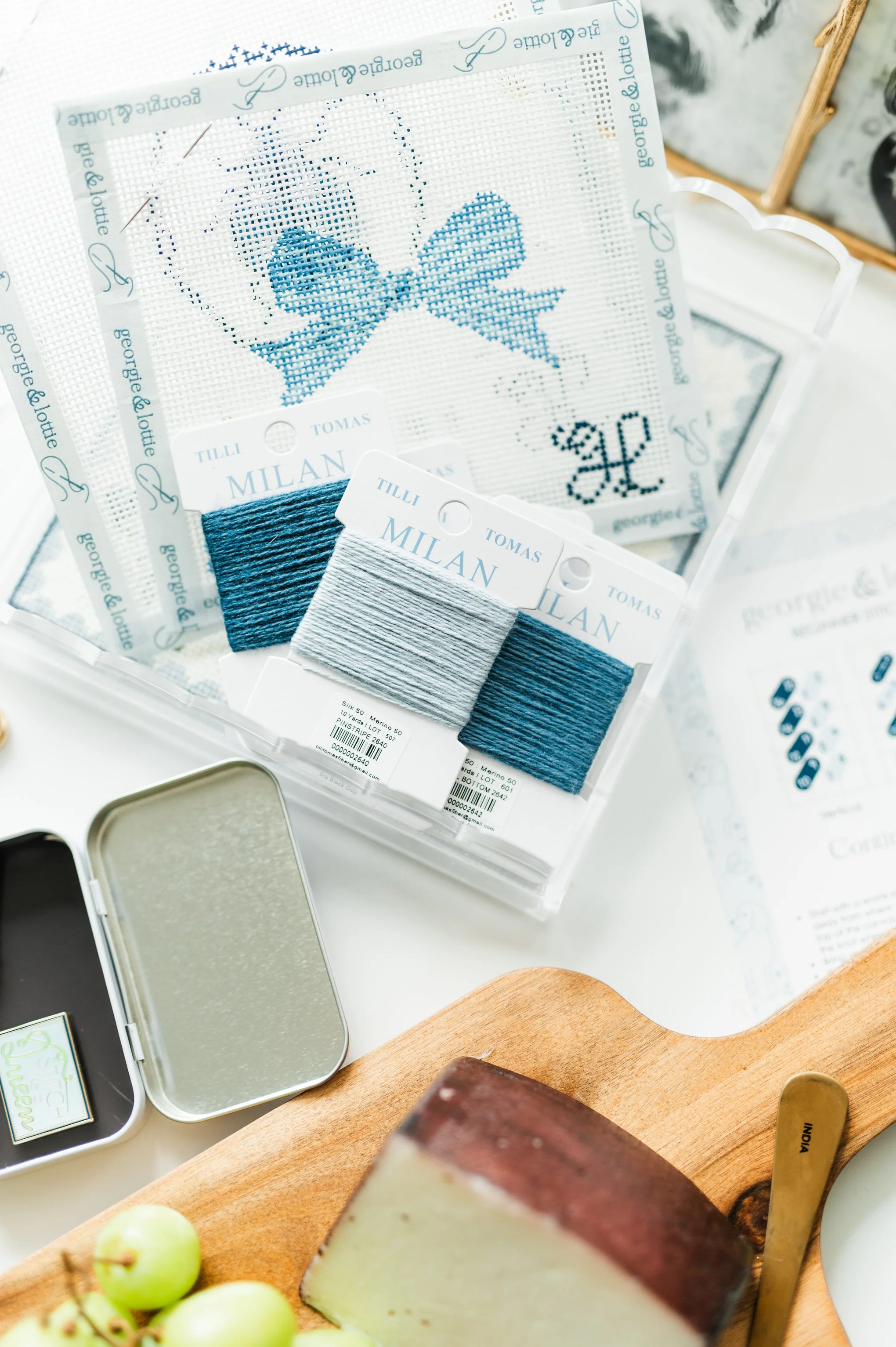
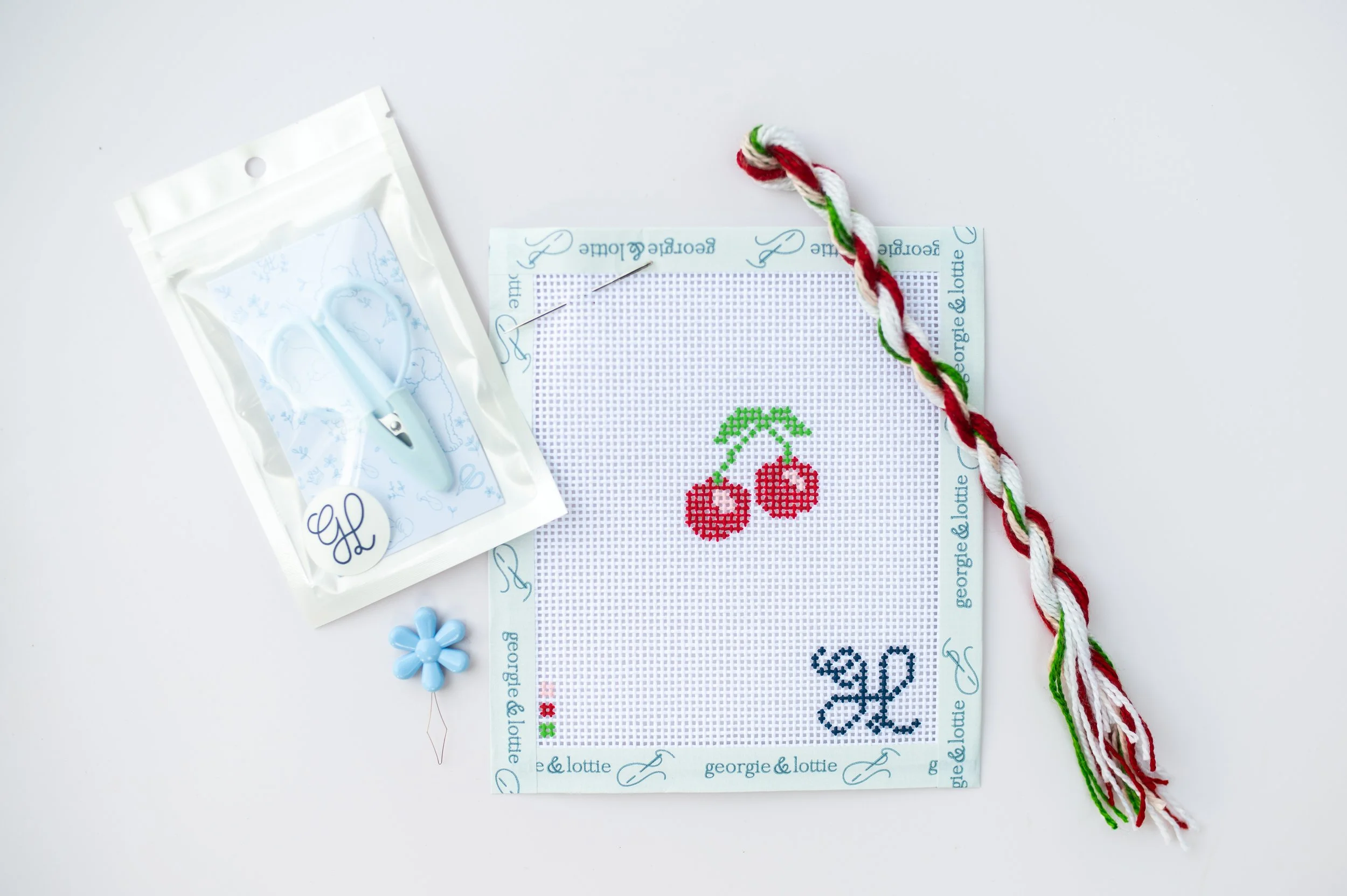
A kit that has absolutely everything. Canvas, threads, needle, instructions. No separate shopping carts, no cross-referencing, no friction between you and actually stitching tonight. The best beginner experience is the one that starts the moment you open the box. Our beginner-friendly kits exist for precisely this reason.
If you’re not sure where to begin, the beginner-friendly collection is your answer. Scroll it. Something will call to you. Trust that instinct completely.
The Confidence Loop (Which Is Real and Slightly Dangerous)
Here is the thing nobody mentions about finishing your first needlepoint canvas: it doesn’t make you feel like a beginner anymore. It makes you feel like a person who does this. A stitcher. Someone with a practice and an opinion about wool weight and a very specific basket they use to keep their projects organized.
Those are very different identities and the transition happens faster than you’d expect.
You finish canvas one. You feel unreasonably proud. You pick a second one, slightly more ambitious. You finish that too. Before long you’re comparing thread options in your head during meetings, you’ve texted a progress photo to someone who didn’t ask for it, and you’ve started a third canvas before the second one is even framed. You are not embarrassed. You shouldn’t be.
This is needlepoint. This is exactly what it does.
Mini canvases work so well as a starting point because the feedback loop is fast. Unlike a massive project that requires months of blind faith before the full picture emerges, a small canvas hands you a win quickly. Quickly is the pace at which confidence is built. Don’t let anyone tell you otherwise.
What Needlepoint Is Quietly Doing to Your Brain (In the Best Way)
Here’s the part we don’t talk about enough: beginner needlepoint is teaching you something beyond the craft itself. It’s teaching you to sit with a thing. To make one good decision, then another, then another, without needing the entire project to be sorted before you begin.
It is also, frankly, one of the few activities left that requires your phone to be face-down on the table. You simply cannot doomscroll and stitch at the same time. We have tried. The results were embarrassing for everyone.
What you get instead is actual focus. The kind where you look up and an hour has passed and you feel genuinely rested rather than vaguely depleted. People aren’t picking up needlepoint because they need a hobby. They’re picking it up because they need a break from a world that has forgotten how to stop. Needlepoint stops. Beautifully and with something gorgeous to show for it.
For more on the meditative side of making things with your hands, Vogue’s piece on mindful crafting is a lovely read. Needlepoint makes an appearance, as it should.
Your First Canvas: The Cheat Sheet
If our best friend texted right now asking where to start, here is exactly what we’d say, in this order:
Buy a kit. Everything included, no decisions required, zero excuses for not starting tonight. Our kit shop is the place.
Visit Stitch School first. Stitch School is our free learning hub covering everything: how to thread your needle, tie a knot, work your first stitches, and secure your thread when you’re done. No dusty manuals. No mystery steps. Just clear, calm instruction that makes the whole thing feel completely doable. Bookmark it. You’ll use it more than once.
Stitch in good light. Natural light is ideal. A proper lamp is a solid second choice. Your eyes will thank you and your stitches will actually be consistent rather than hopefully consistent.
Ignore the back. The back of a needlepoint canvas is not a performance. No one is grading it. Not even us. Especially not us.
Frame it when you’re done. Give the project its proper ending. It deserves a frame. You deserve the wall space.
Check the FAQ when something confuses you. We’ve answered the questions we hear most. Yours is probably in there, asked by someone equally charming who figured it out just fine.
The Mini Canvas That Grows With You
One of the things we love most about needlepoint is that it has no ceiling. You can stitch small, joyful canvases for the rest of your life and be completely, perfectly, smugly happy about it. Or you can let your ambition grow with your skill and graduate to larger, more complex pieces that make your guests stop mid-conversation and ask what that is on your wall.
Both paths are correct. Both begin in exactly the same place.
One small canvas. One threaded needle. One first stitch that is slightly uneven and completely wonderful.
You’re about to become someone who does needlepoint. Browse our full shop, find the canvas that makes you unreasonably happy, and get started. We’ll be right here, absolutely delighted, waiting to hear how it goes.
Georgie & Lottie Co. is a hand-painted needlepoint canvas brand based in Richmond, VA. We make canvases for people who take their stitching seriously and their lives with a little humor.