
How Needlepoint Helped My Anxiety (And Got Me Off My Phone)
How needlepoint helped me put my phone down, space out my therapy appointments, and actually feel okay again.
I live in Washington, DC.
Which means the news is never background noise. It is always, always the foreground.
After Covid, something shifted in me that I could not seem to shift back. The world felt louder, faster, and more threatening. Menopause arrived right on schedule to make sure I had no reserves left. And my phone, that little glowing rectangle I had always been able to put down, became the thing I reached for every single time I needed to feel like I was doing something.
Except scrolling never made me feel like I was doing something. It made me feel like I had lost a few more hours to a version of my life I wasn't actually living.
“The phone was the problem. The phone was also the habit. That’s the trap.”
When Everything Stacked Up At Once
Here is the honest version of what was happening: I had anxiety that had been manageable for years, but post-Covid it wasn't manageable anymore. I was in therapy. I was on medication. Both were helping, but I could feel myself reaching for my phone the moment any discomfort showed up, which was constantly.
I wasn't alone in that. A 2024 study of midlife women found that anxiety was significantly higher in women than men during the pandemic, and that for women specifically, reduced social support compounded that anxiety in measurable ways. And for those of us who were also navigating perimenopause or menopause during that time, the stress hit differently. Research has confirmed what many of us suspected: the hormonal disruption of menopause and the psychological disruption of a global pandemic are not a gentle combination.[1]
My phone was not helping any of that. I knew it. But knowing it and stopping it are two different problems.
What the Research Actually Says About Scrolling
Passive scrolling, which is exactly what most of us are doing when we pick up our phones without a specific purpose, has been specifically linked to clinically elevated anxiety in recent research. A 2024 study published in Computers in Human Behavior found that passive scrolling was the screen behavior most strongly associated with anxiety, even when researchers controlled for age, existing vulnerabilities, and other factors.[2]
That finding, which showed that it wasn't just how much time you spent on screens but what you were doing while you were there, landed for me. Because I wasn't scrolling for information. I wasn't connecting with people. I was just... numbing. Doing the digital equivalent of staring at a wall, except the wall was algorithmically designed to keep my nervous system activated.
That is not rest. That is the opposite of rest.
“Passive scrolling was the screen behavior most strongly associated with anxiety, even when researchers controlled for existing vulnerabilities.”
I Came Back to Needlepoint After 20 Years
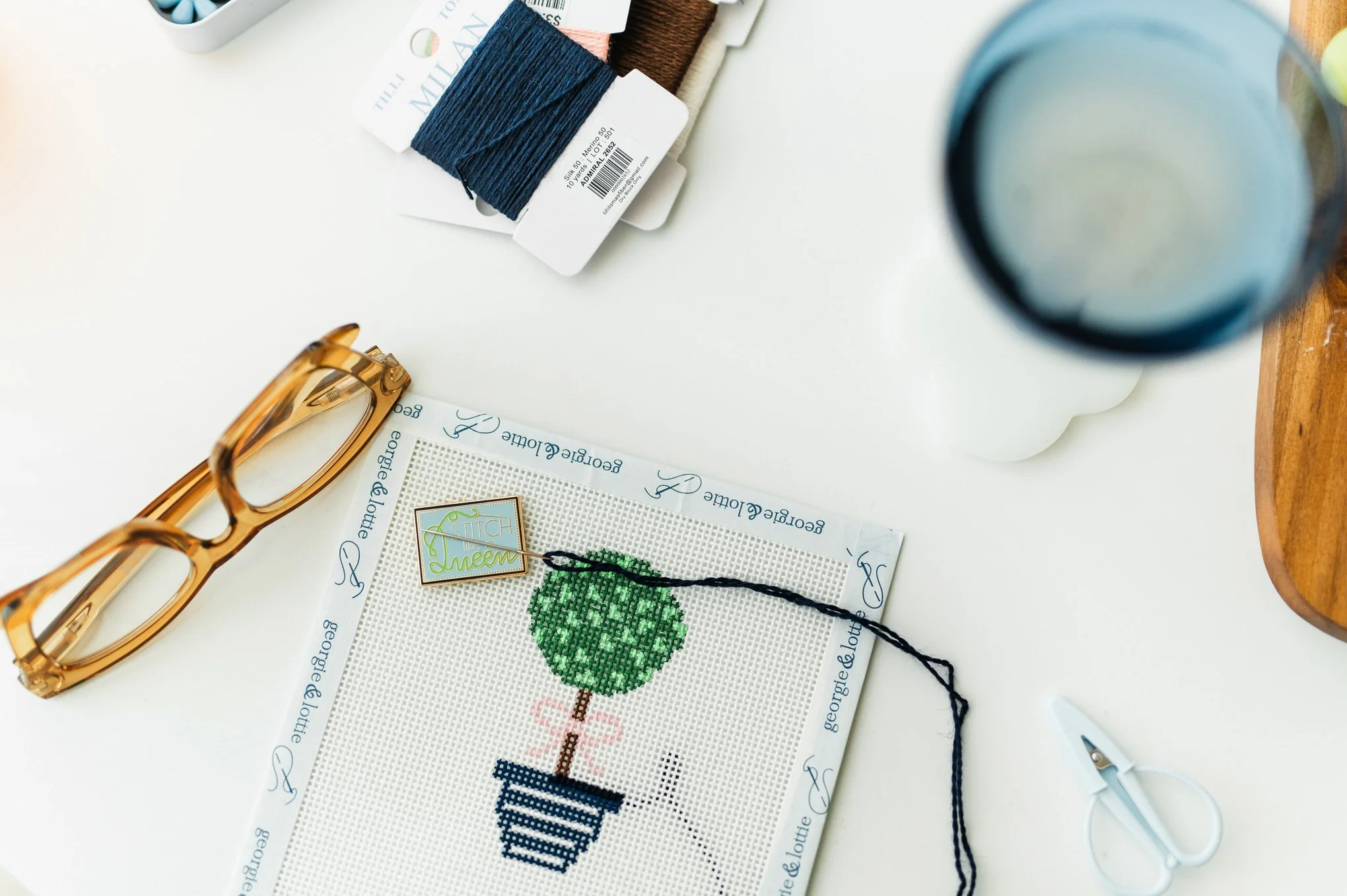
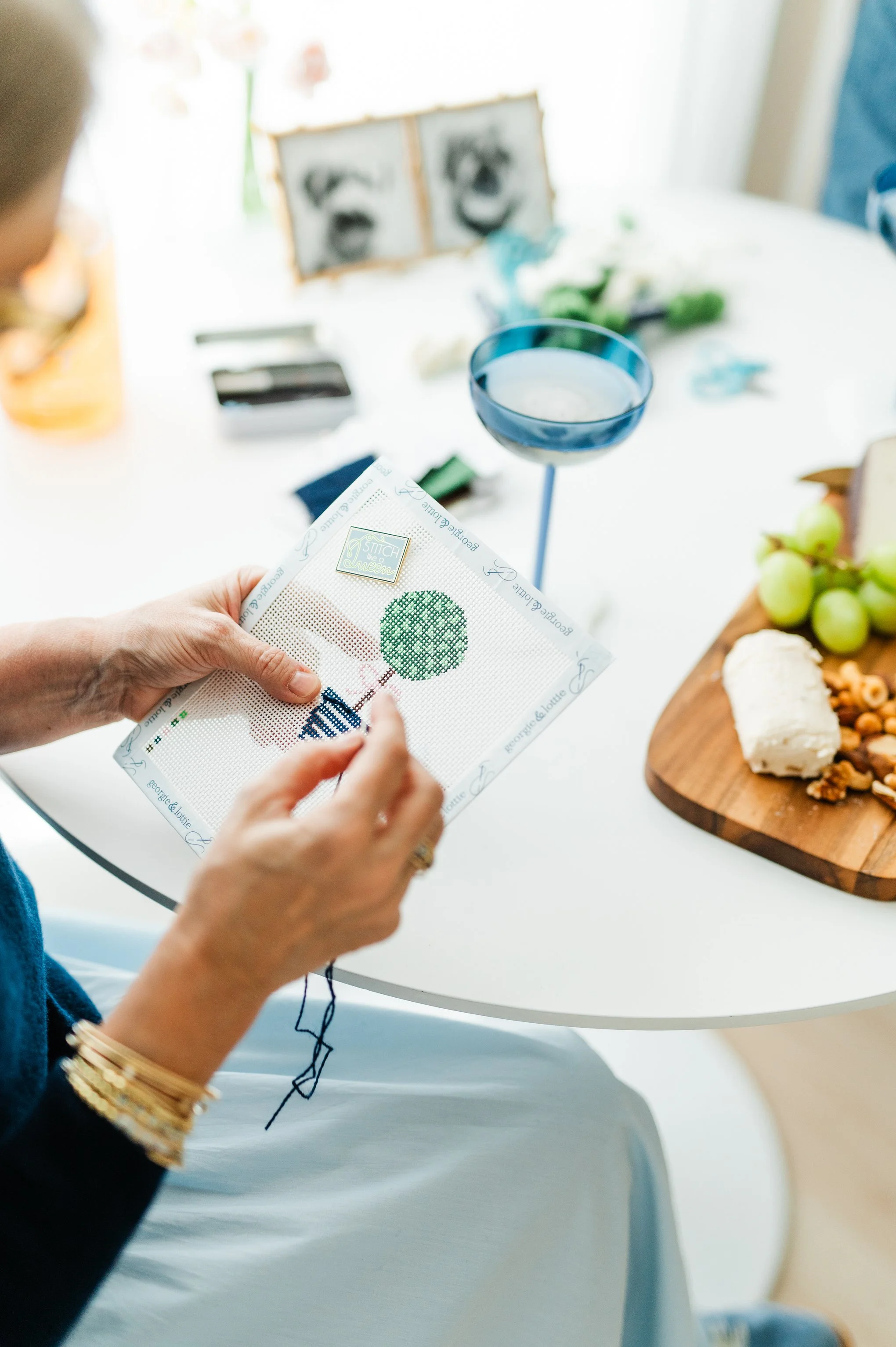
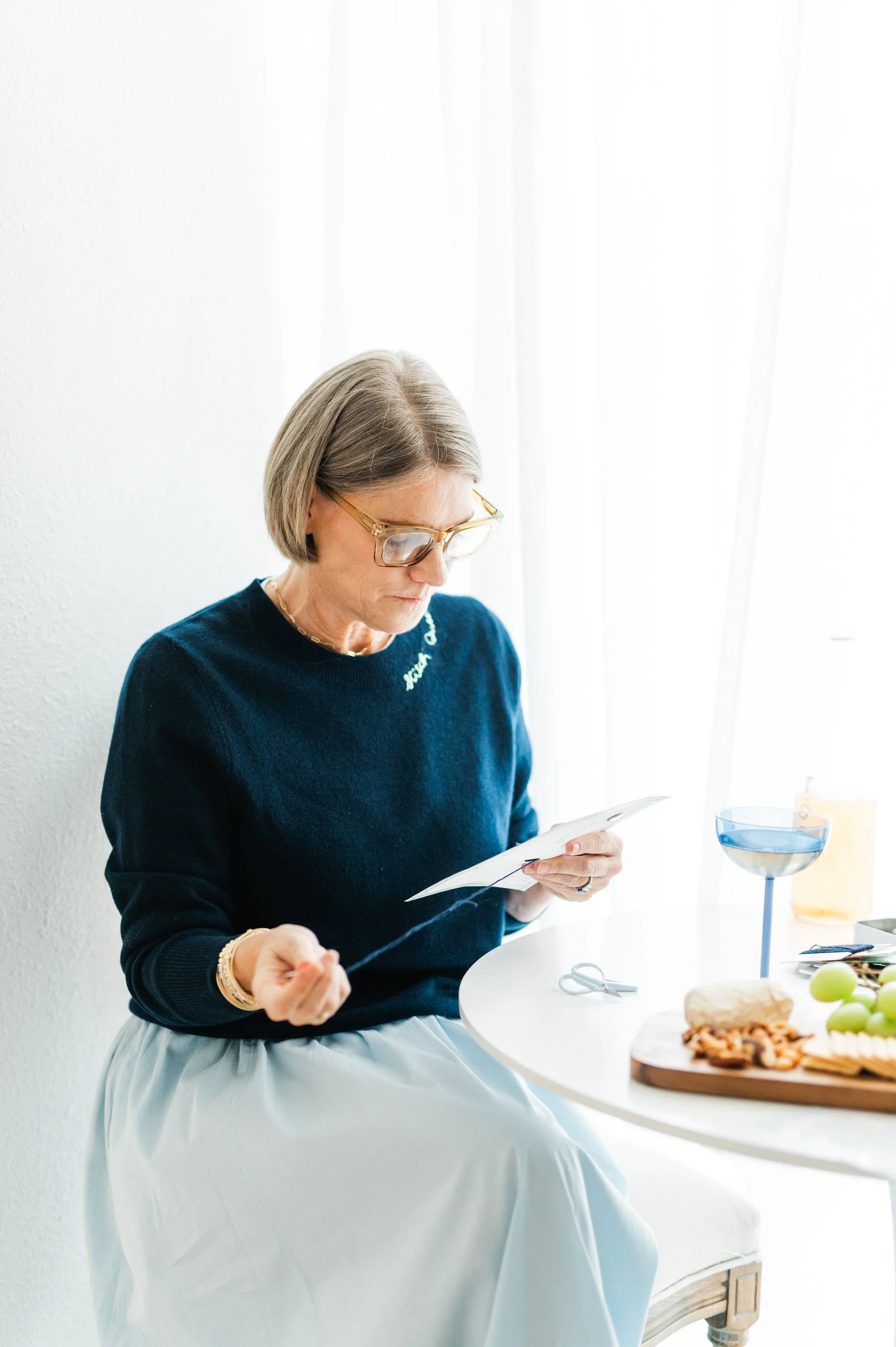
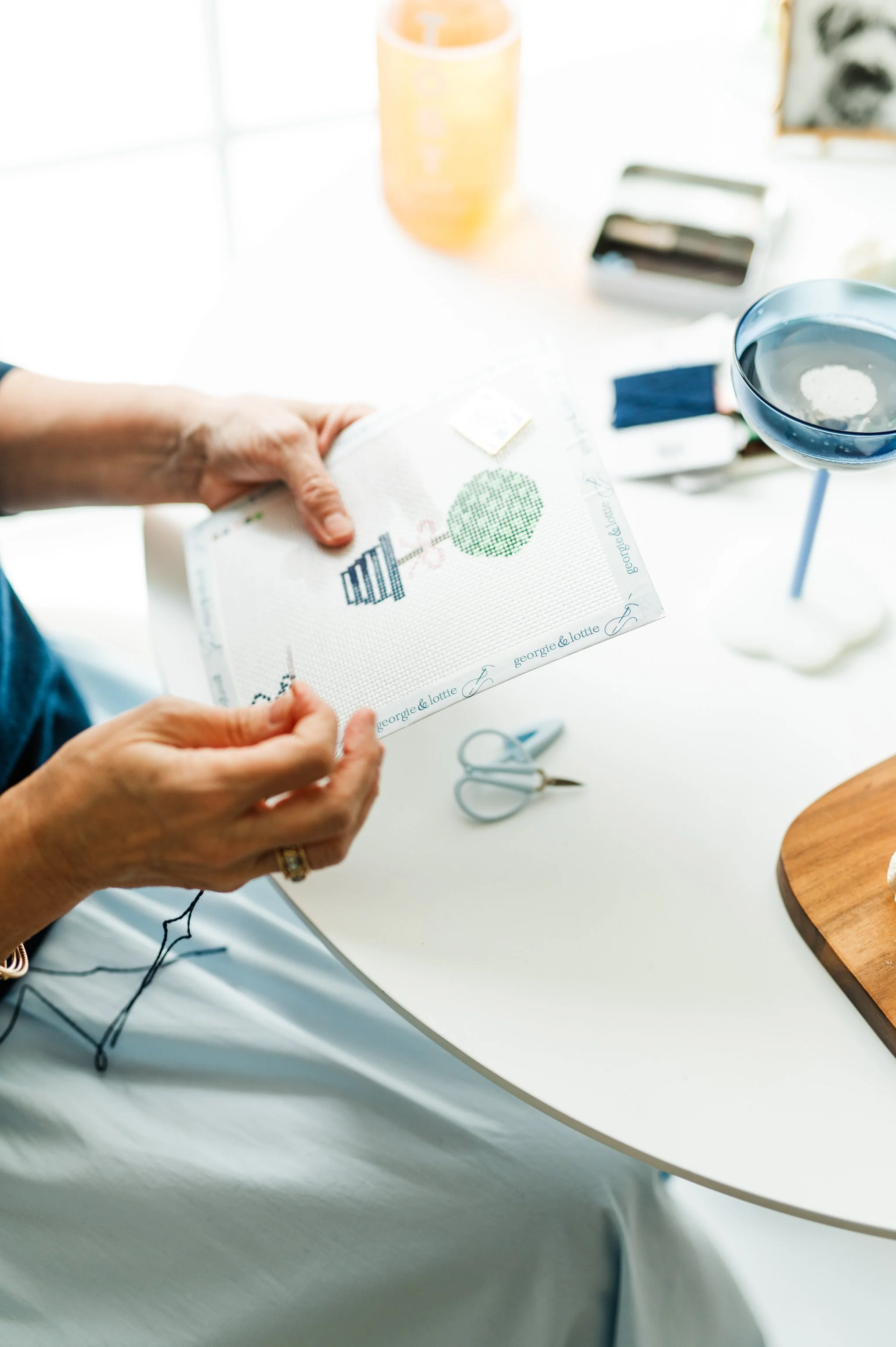
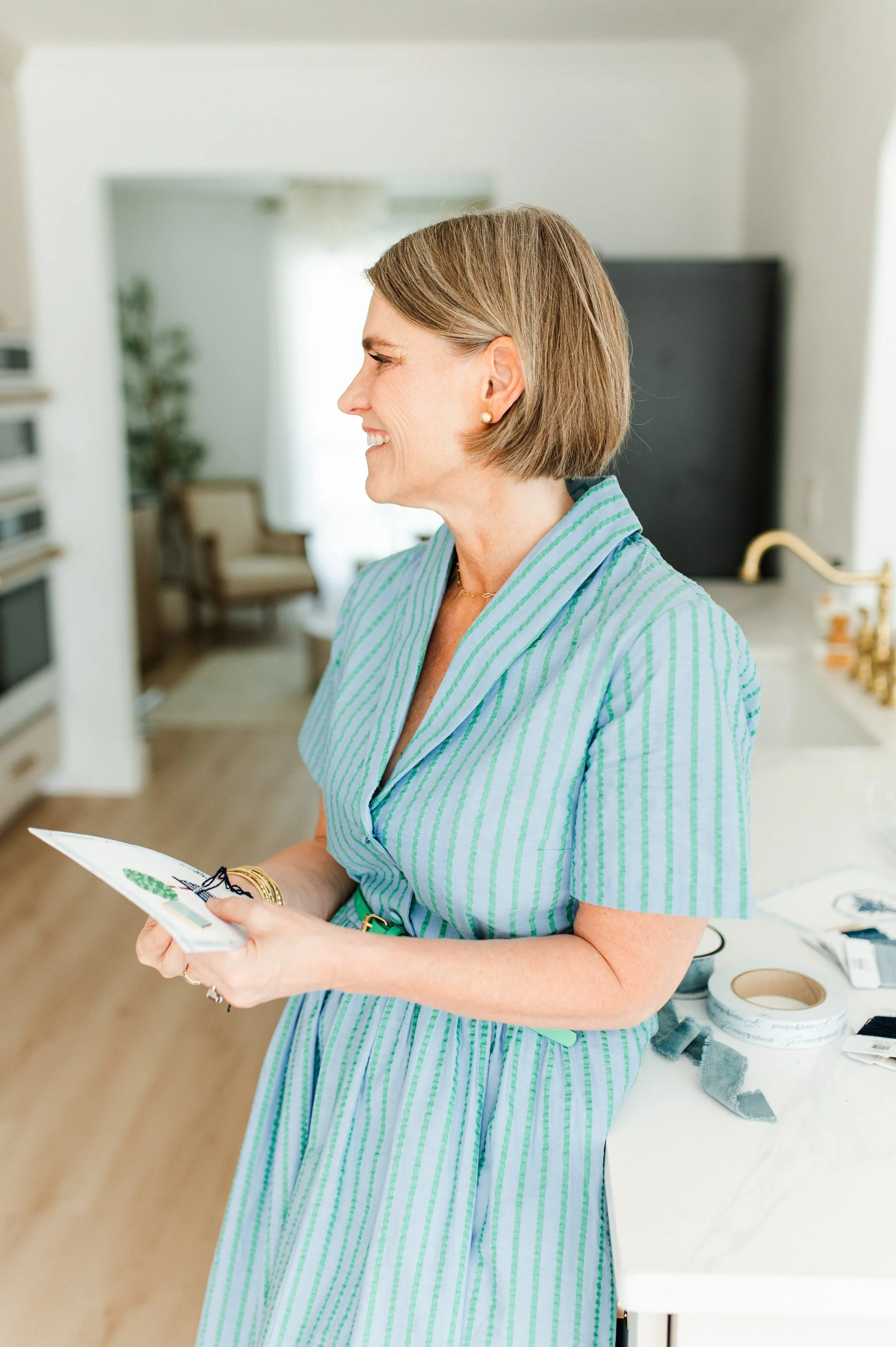
I had done needlepoint as a younger woman and set it down the way you set things down when life gets full. When I came back to it, I was not expecting it to be medicine. I was just looking for something to do with my hands.
What happened instead surprised me.
My hands were busy, which meant I couldn't pick up my phone. That sounds so simple. But for someone who had been reaching for a screen the moment any anxious thought surfaced, having a physical reason not to reach was enormous. The repetitive motion, the needle going in and coming back out, the small satisfying pull of thread through canvas, it turned out to be exactly the kind of rhythm my nervous system had been desperate for.
The science has a name for what I was experiencing. Researchers describe the repetitive motion of needlework as meditative, resulting in what multiple studies call a calming Zen-like state. A comprehensive scoping review published in Issues in Mental Health Nursing in 2024 found that needlecraft activities, including needlepoint, knitting, and embroidery, had overwhelmingly positive effects on mental wellbeing. Participants reported reduced anxiety and stress, improved mood, and enhanced quality of life.[3]
The Flow State Is Real (And Your Phone Can't Give It To You)
There is also a neurological explanation for why needlepoint works the way it does, and it has to do with something called a flow state.
Flow is what happens when you are fully absorbed in an activity that requires just enough skill to keep you engaged but isn't so difficult that it becomes stressful. Psychologist Mihaly Csikszentmihalyi spent decades studying this state, and craft activities including needlework are considered a textbook on-ramp to it.
When you enter flow, your brain releases dopamine, serotonin, and endorphins simultaneously. The part of your brain responsible for self-criticism and rumination quiets. Your default mode network, the one responsible for mind-wandering and anxious looping, settles down. You are, chemically and neurologically, okay.[4]
Your phone, for what it's worth, is also a dopamine delivery system. But it is erratic and extraction-based. It gives you little hits that require more and more stimulation to feel the same effect. The flow state that comes from making something with your hands is the opposite: slow, earned, and genuinely restorative.
“The flow state that comes from making something with your hands is slow, earned, and genuinely restorative. Your phone can’t replicate that.”
What Changed For Me
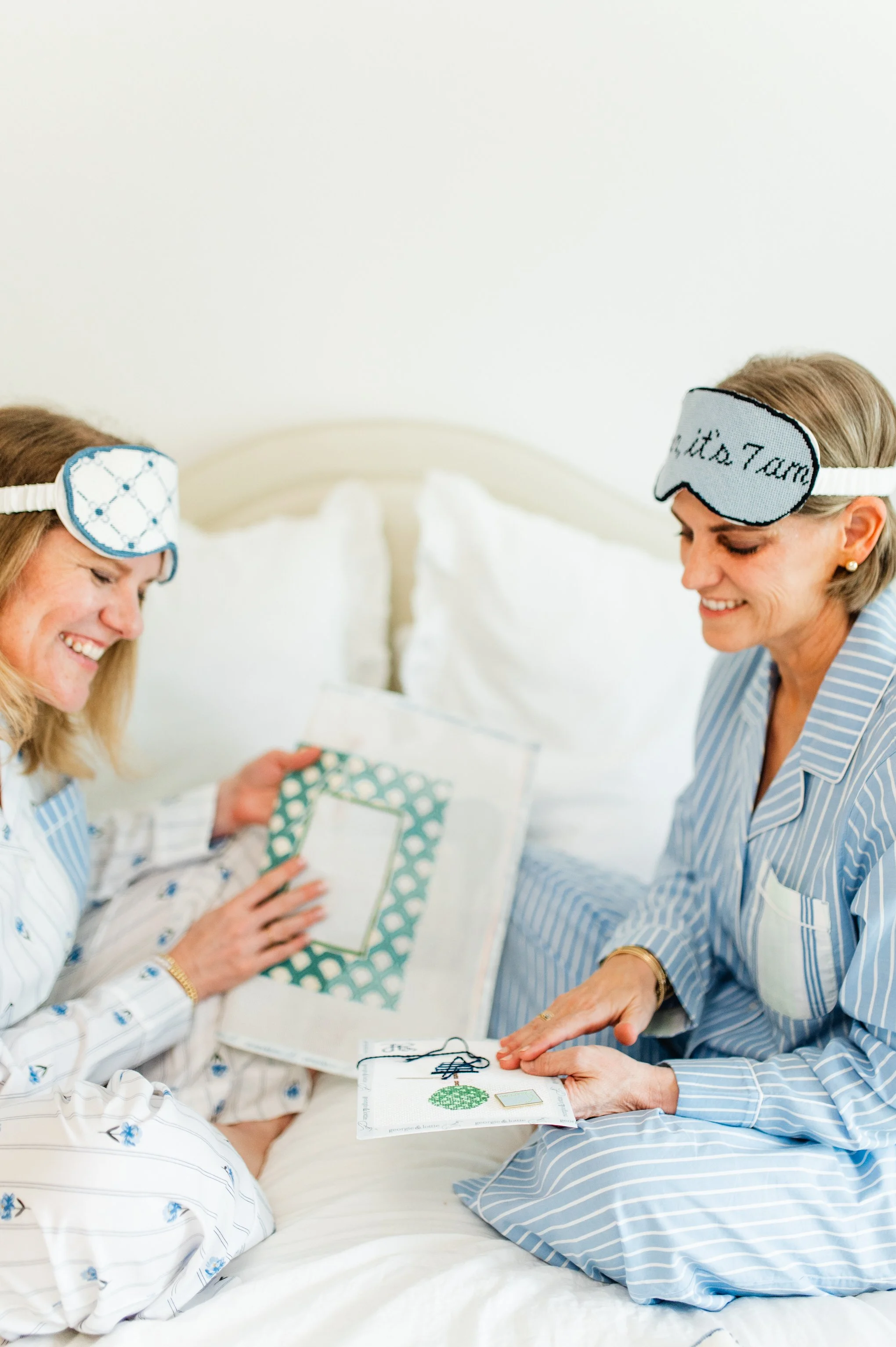
I want to be clear: I am a believer in therapy. I am a believer in medication. If those things are working for you, that is not a sign of weakness, it is a sign that you are paying attention to yourself. What happened for me is that needlepoint became a complement to that work, not a replacement for it.
But over time, as I started stitching regularly, something did shift. I was able to space out my therapy appointments. I eventually, with my doctor's guidance, went off my anti-anxiety medication. Neither of those things happened because needlepoint is magic. They happened because I had found a daily practice that regulated my nervous system, gave my hands something to do, and got me off my phone for actual stretches of time.
My mind, which had been running at a frequency I couldn't seem to turn down, finally found a lower gear.
The Permission Slip You Didn't Know You Needed
Here is what I want you to hear if any of this sounds familiar: you are not lazy for needing to slow down. You are not weak for finding the news overwhelming. You are not behind for not having figured out how to feel calm in a world that is genuinely a lot.
You are a person with a nervous system that is doing exactly what nervous systems do when they are overstimulated. They look for an exit. For a long time, my exit was my phone. It was the wrong door.
Needlepoint was the right one.
Not because it is precious or old-fashioned or something your grandmother did. But because your hands, when they are busy making something beautiful, cannot also be scrolling. And sometimes that is enough to begin.
If you are curious about where to start, we designed our canvases specifically for that moment, the one where you want to pick something up but have no idea where to begin. Browse our collection at georgieandlottie.com. Your phone will still be there when you're done. It always is.
---
Note: This post reflects my personal experience. If you are struggling with anxiety, please work with a healthcare professional. Therapy and medication are valid, effective tools, and I encourage you to use whatever works for you.
Sources
1. Mental health during the COVID-19 pandemic: the importance of social support in midlife women. PMC / National Library of Medicine, 2024.
2. Screen time woes: Social media posting, scrolling, externalizing behaviors, and anxiety in adolescents. Computers in Human Behavior, 2025.
3. Healing Stitches: A Scoping Review on the Impact of Needlecraft on Mental Health and Well-Being. Issues in Mental Health Nursing, 2024.
4. The Neuroscience of Flow State: Inside the Brain's Optimal Mode. Frontiers in Psychology, 2021.