
The Stitcher's Guide to Traveling with Needlepoint (Without Losing Your Mind or Your Scissors)
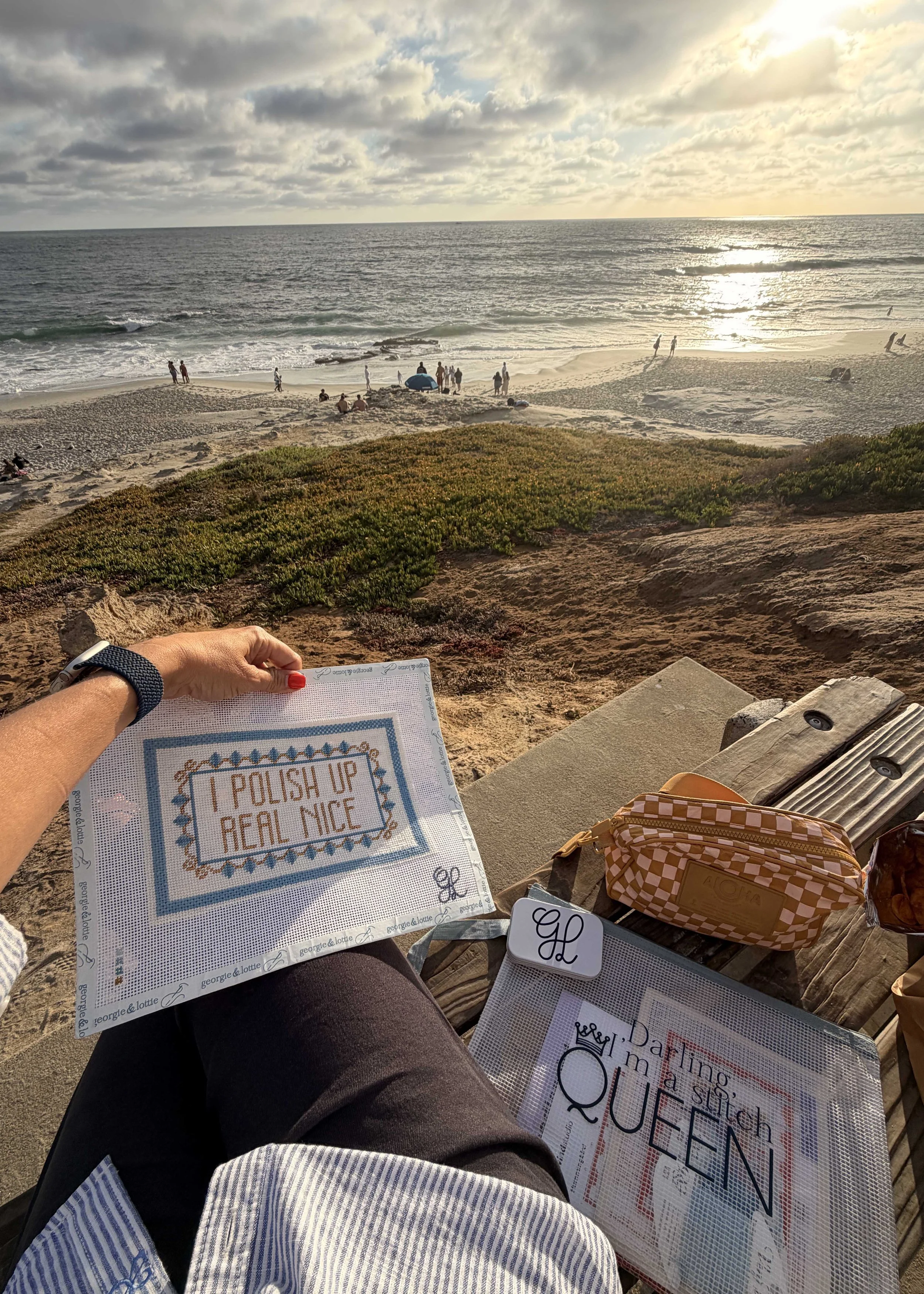
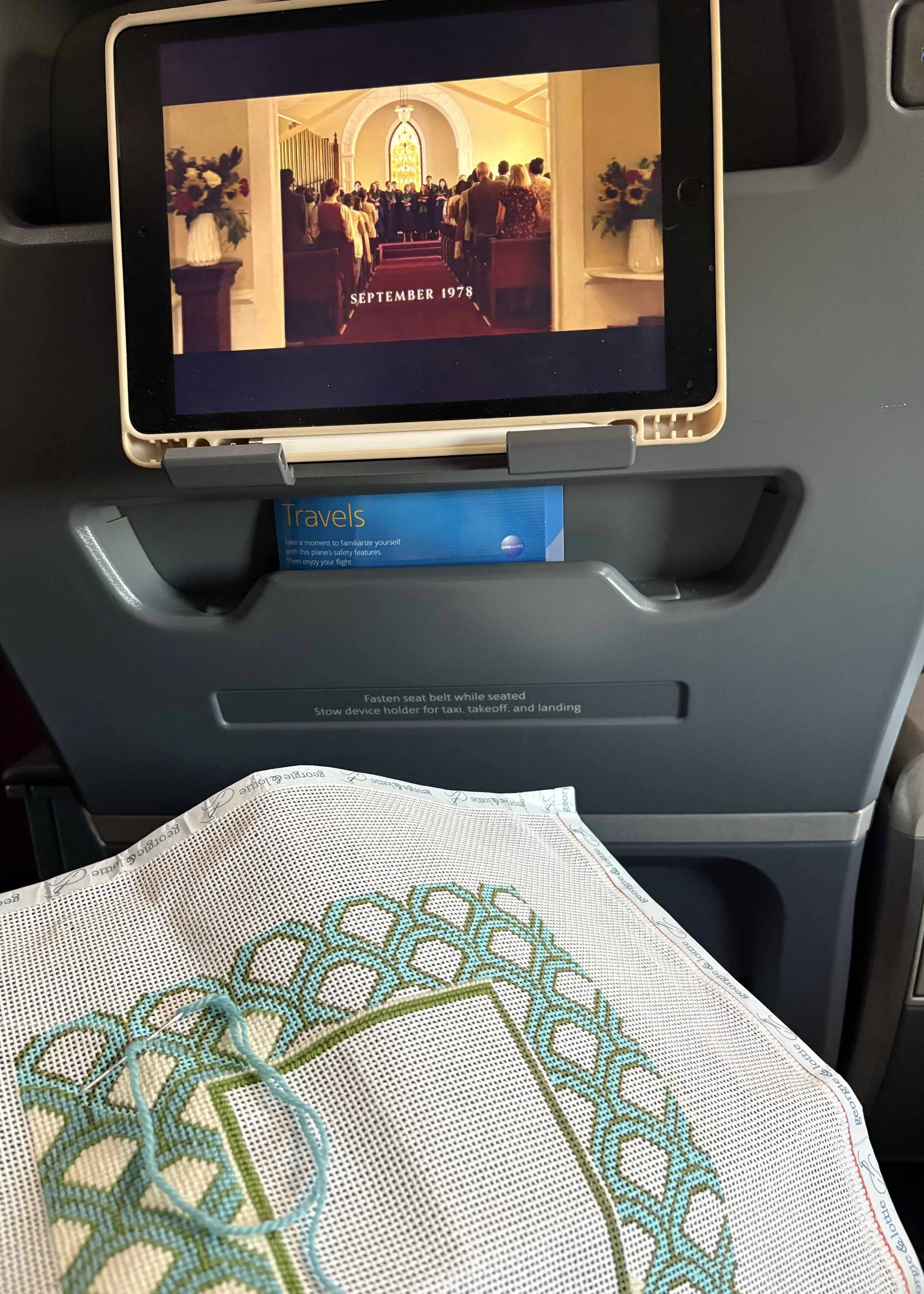
You've earned this trip. The hotel is booked, the out-of-office is set, and for approximately 48 to 72 hours, your schedule belongs entirely to you.
And then the panic sets in. Not about packing. Not about traffic to the airport. About what you're going to do with your hands.
If you're a stitcher, you already know: idle hands are a problem. Long flights, layovers, slow mornings on a hotel balcony with a good cup of coffee, lazy afternoons on a beach or a porch or a train. These are prime stitching hours. The trick is showing up prepared.
We've stitched our way across a lot of airports. Here's everything we've learned.
Why Needlepoint Is the Perfect Travel Craft
Let's start with the obvious: needlepoint is extraordinarily portable. Unlike knitting (the yarn situation) or embroidery (the hoop situation), a needlepoint canvas folds into almost nothing. Your threads fit in a tiny zip pouch. Your needle case slips into a pocket. The whole kit, if you do it right, weighs almost nothing and takes up less room than a paperback.
But the real reason needlepoint travels so well isn't the size. It's the attention-to-detail-to-brain-quieting ratio. Air travel, in particular, is tailor-made for needlepoint. You are physically contained. You have nowhere to be. The rhythm of a needle through canvas is one of the most grounding, satisfying things a pair of hands can do at 35,000 feet.
Pack it. You'll thank yourself.
Choosing the Right Canvas for Travel
Not every canvas is a good travel companion. Here's how to think about it.
Go smaller than you think. A 5x5 or 6x8 canvas is ideal for most trips. You want something you can make visible progress on in a few hours of stitching, not a sweeping 14x18 project that's going to stare at you judgmentally from across the hotel room. Travel is about finishing things and feeling accomplished.
Choose a canvas with a clear stitching plan. Complicated shading, intricate color changes, or areas that require a lot of decision-making mid-stitch are better left for home, where your thread collection is organized and your reading glasses are on the nightstand. Travel is for the canvas where you know exactly what you're doing and you can just go.
Consider your mesh count. If you're working on 13-mesh, you'll move faster and need less thread management than 18-mesh. For long travel days, faster progress is deeply satisfying.
Ornaments and small motifs are underrated. Rounds, circles, small square canvases. These are perfect travel formats. They feel like gifts you're making for yourself. They finish quickly. They are extremely smuggable in a tote bag.
Building Your Travel Needlepoint Kit
This is the part where most people overpack. Resist the urge. The beauty of a travel kit is its restraint.
The Essentials
Your canvas. For travel, smaller canvases are easiest to transport and keep in project bags that easily fit in a carry-on.
Thread. highly recommend bringing all the thread for your project. You might get more stitching time than you think!
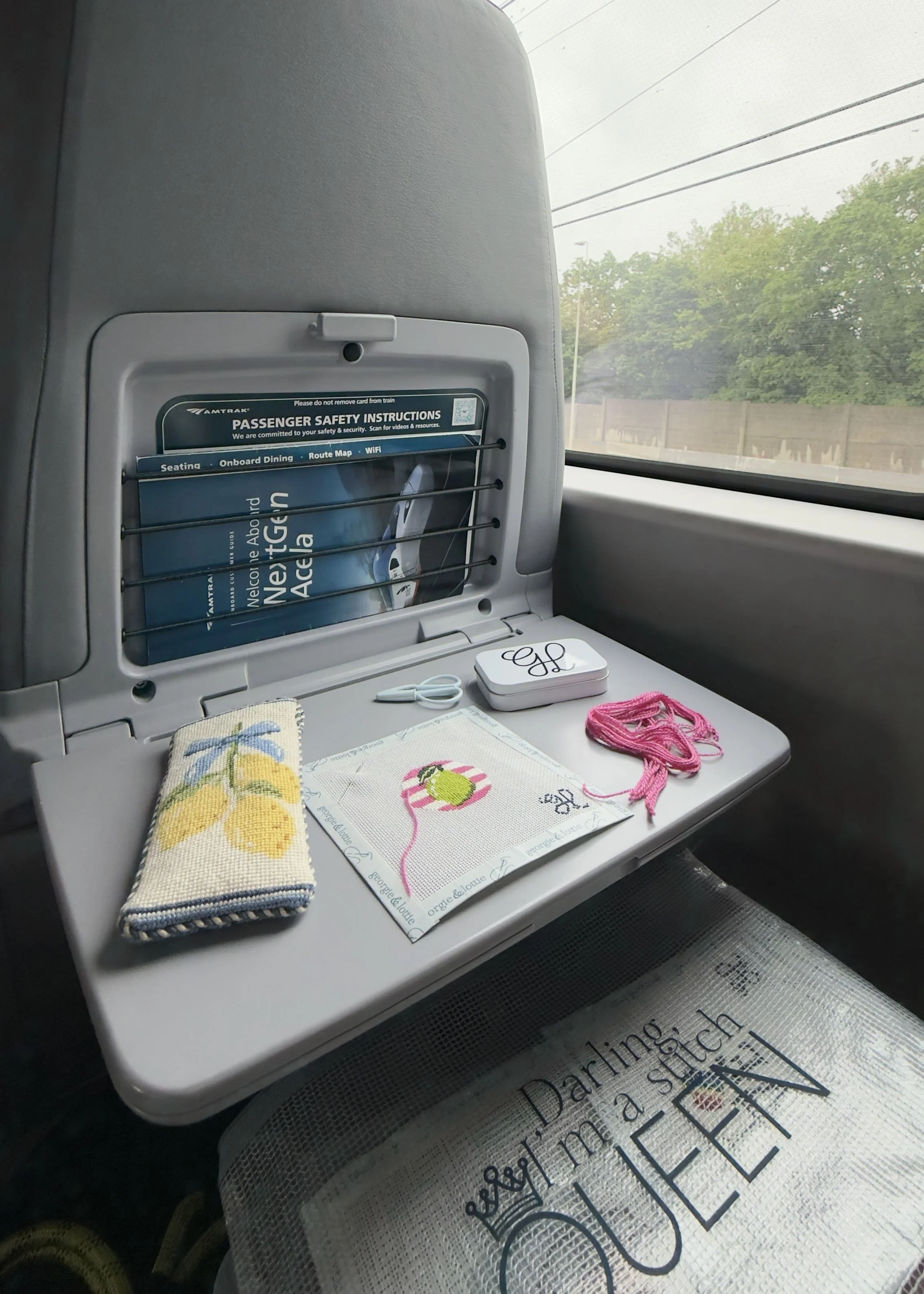
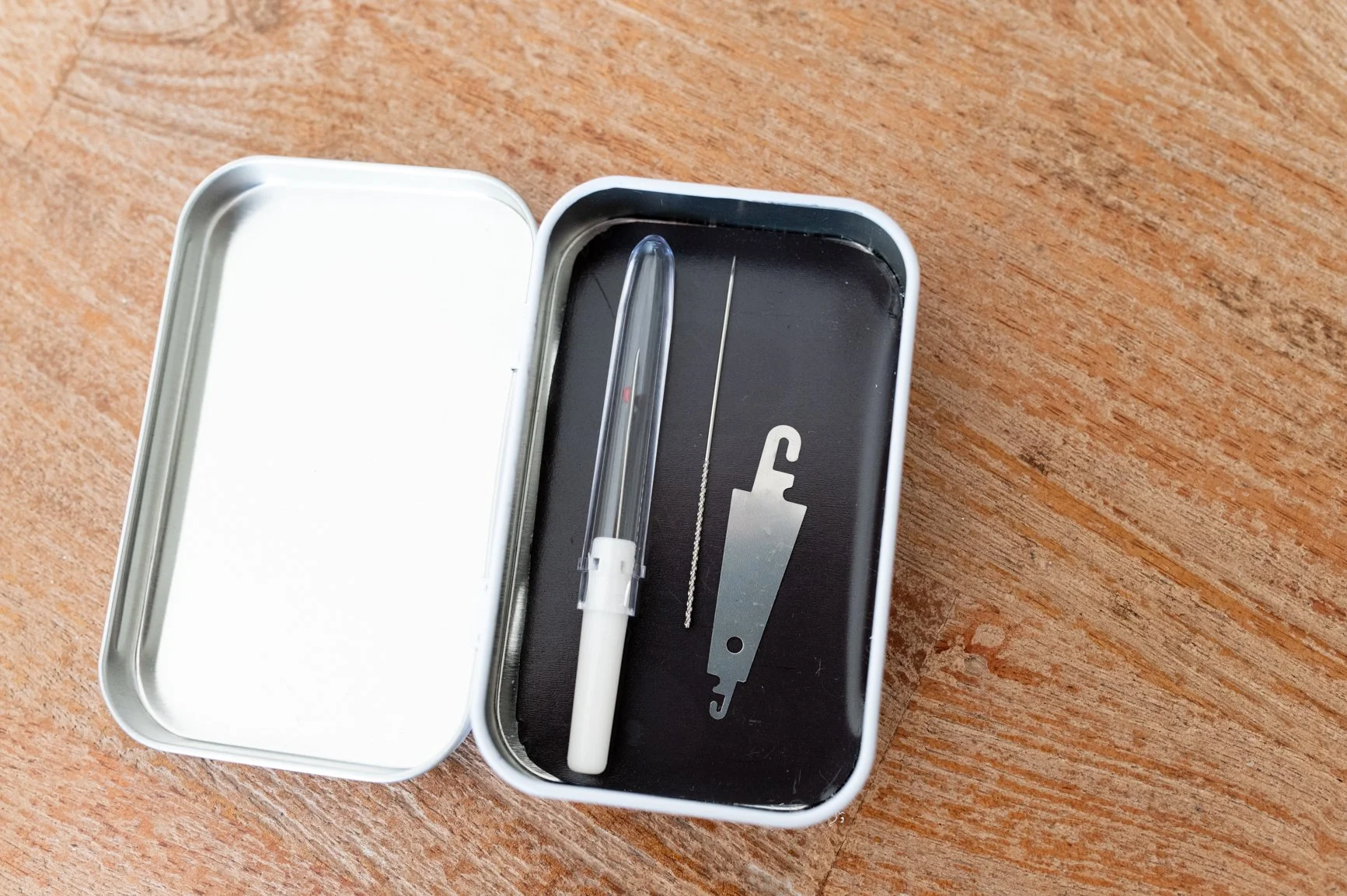
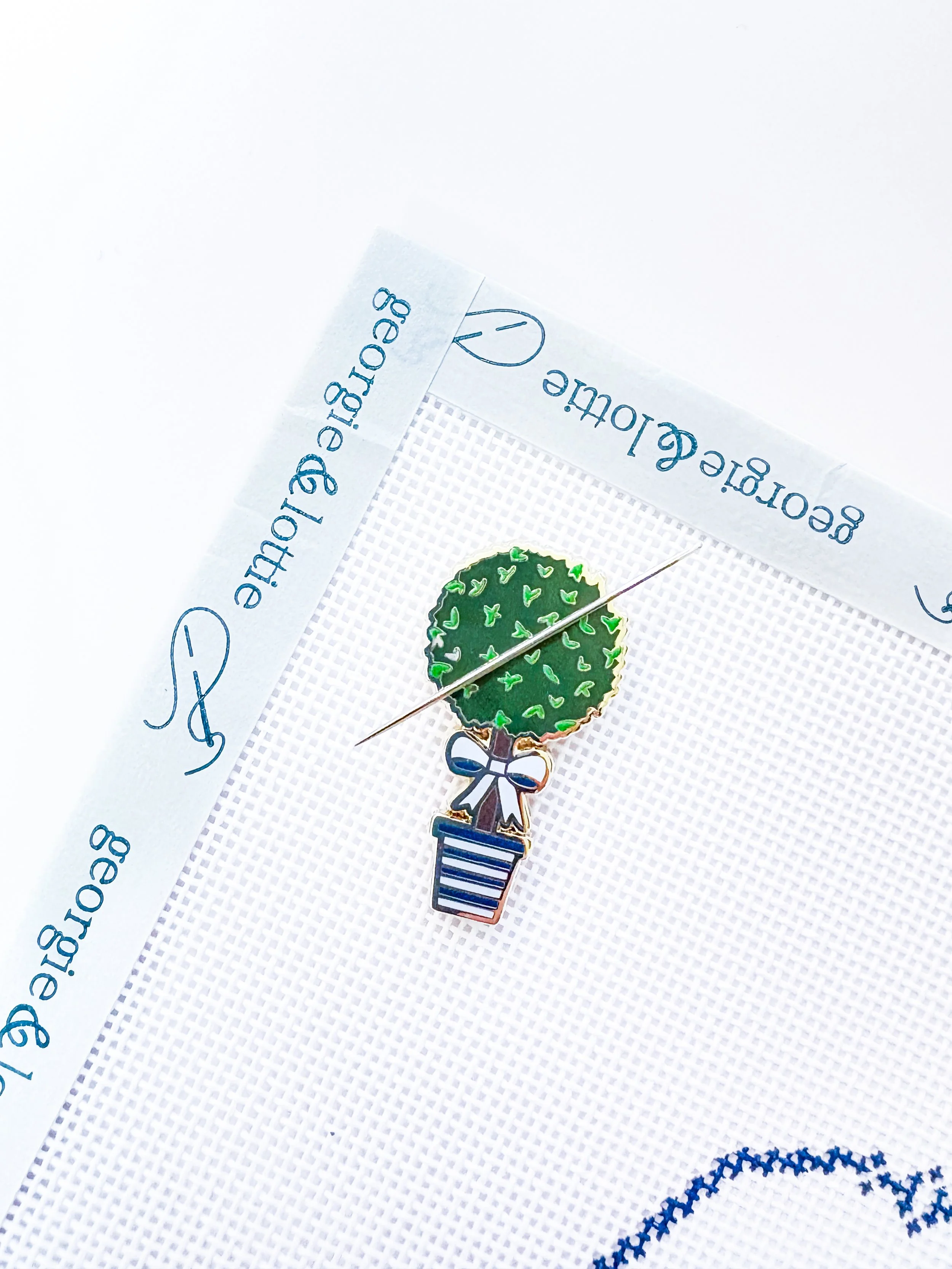
Two or three needles, maximum. Bring a small needle case (like our Rescue Kit) and a needle minder to keep them safe. Loose needles in a bag are a hazard.
Small, sharp scissors. More on this in a moment.
A good light source. If you're stitching in a dim airplane cabin or a hotel room with atmospheric-but-useless lighting, a small rechargeable LED light clip is a game changer. It attaches to your canvas, runs for hours, and costs almost nothing.
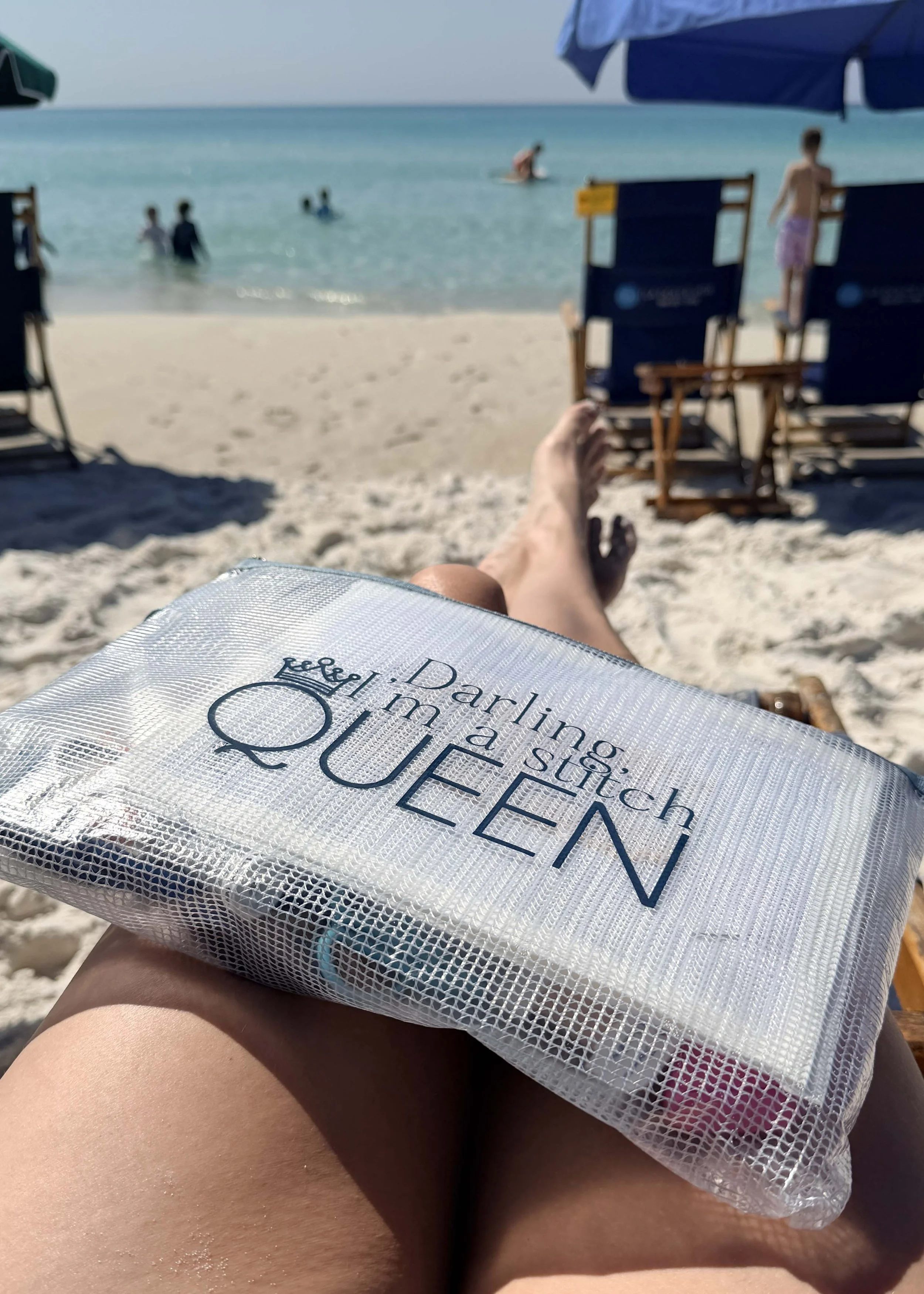
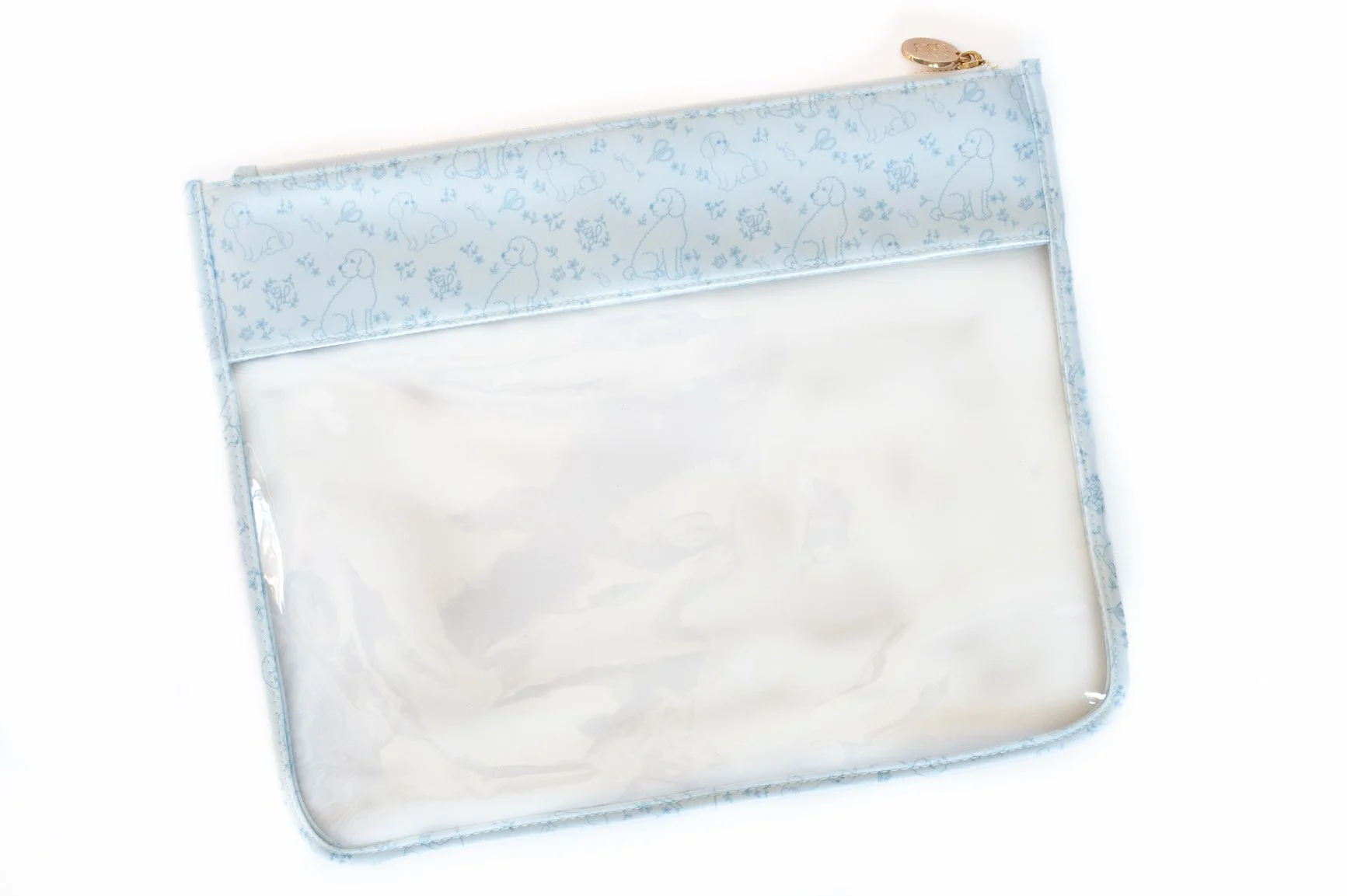
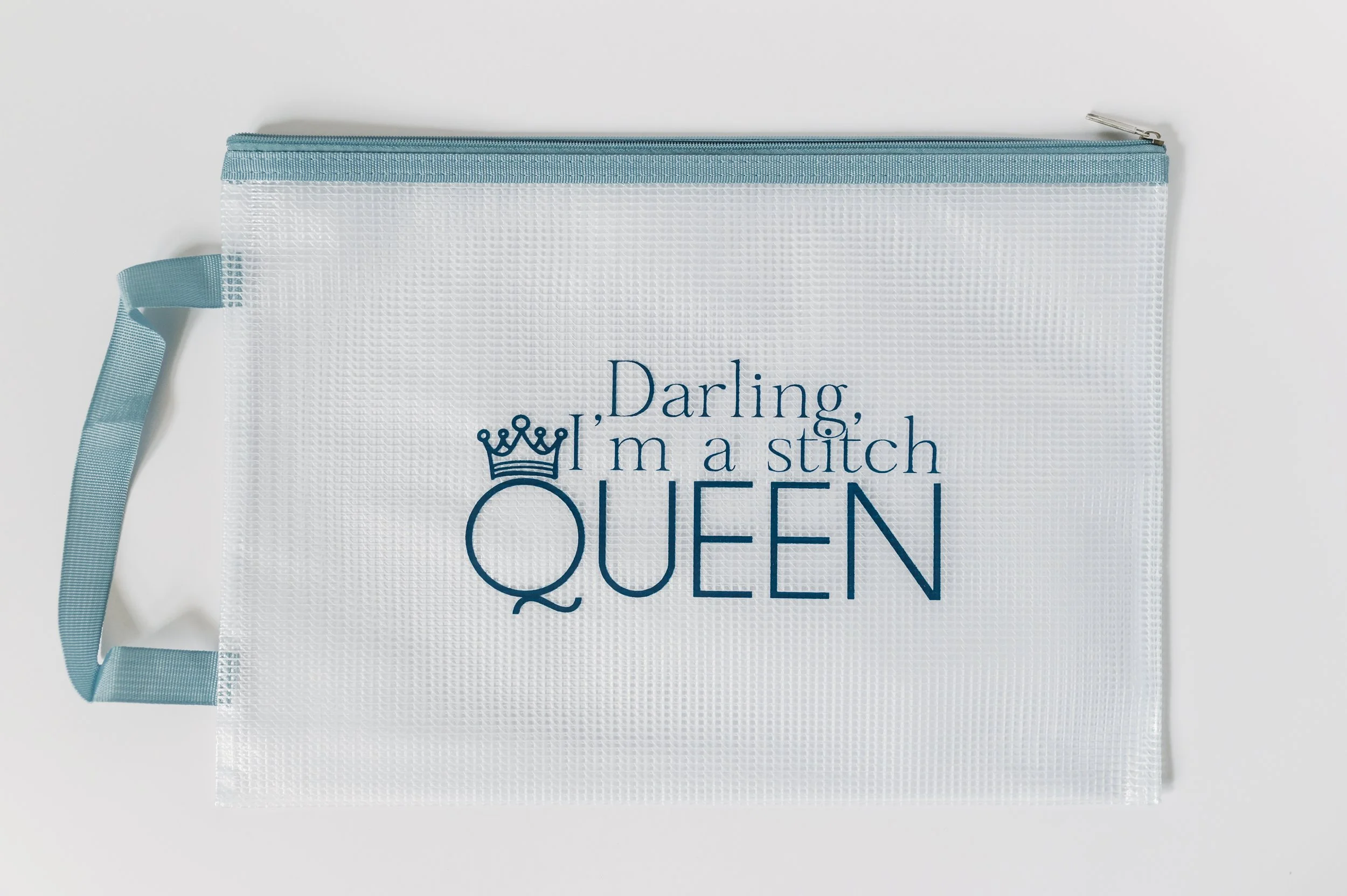
A project bag. Something flat and structured that keeps your canvas from getting bent and your threads from escaping. A zippered pouch or a flat canvas tote with a zipper top works beautifully. BONUS: Our Darling I’m a Stitch Queen project baghas a handle which makes taking it to the beach or pool a dream!
What NOT to Bring
Your entire thread stash. We understand the impulse. What if you need the dusty rose? What if the coral needs a touch-up? Leave it. Bring exactly what your canvas requires, plus one backup skein of the color you'll use most. That's it.
Embellishments you haven't attached yet. Beads, metallics, specialty fibers requiring specialty needles or laying tools. Save those for home. Travel kits should be simple.
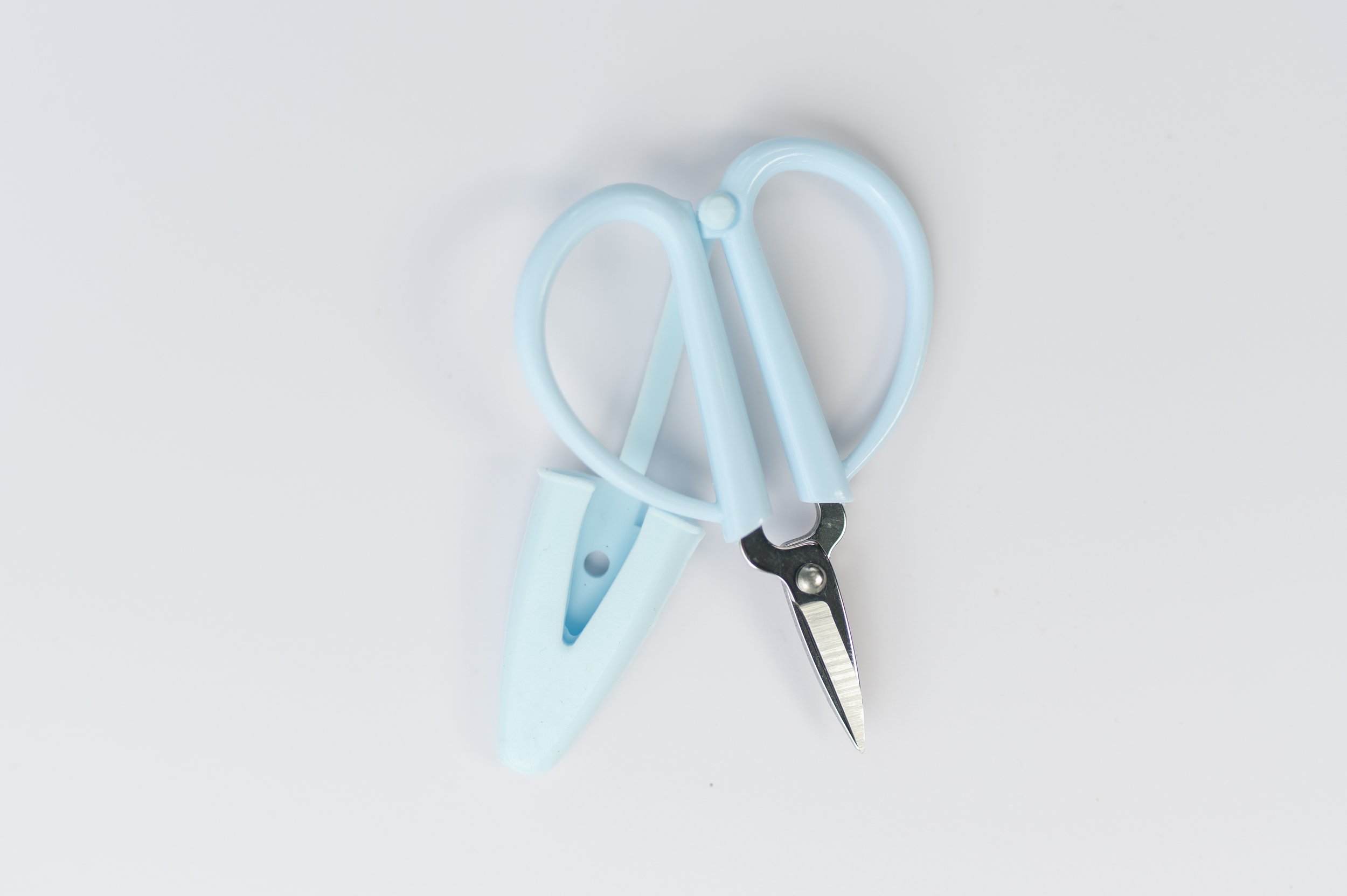
Your "good" scissors. Pack a pair of small travel scissors that you'd be fine losing at a TSA checkpoint, because it happens. The gold snips you've had for years are not airport scissors. Highly recommend our snips!
Navigating TSA with Needlepoint Supplies
Good news: the TSA generally permits needlepoint needles in both carry-on and checked baggage. The official guidance lists sewing needles (which includes tapestry/needlepoint needles) as allowed in carry-on bags.
Our advice:
Keep needles in a secure, identifiable case. A clear needle tube or a Rescue Kit is the perfect place to keep ecerything and it already comes with a needle threader, seam ripper and a Snag Nabit.
Scissors are where it gets complicated. The TSA allows scissors with blades shorter than 4 inches from the pivot point in carry-on bags. Most small embroidery scissors fall within this limit, but if you're at all uncertain, check your scissors before you pack them. Thread snips (the ring-style with no blades) are generally fine.
When flying internationally, check the rules of the country you're entering, not just the U.S. Some destinations have stricter guidelines about sharp objects in cabin baggage.
Pack your kit on top of your bag. If your bag does get flagged for inspection, you want the agent to be able to get to your stitching supplies easily without digging through everything else you own. A clearly organized project bag goes a long way.
Stitching in Transit: Practical Tips
On a plane: Window seat is ideal. You have a surface to the left (or right), no one climbing over you, and the light is better. Aisle seats mean elbowing your neighbor on every stitch. Middle seats are for people who did not plan ahead.
On a train: This is the gold standard of stitching environments. Smooth ride, usually a table, no turbulence. Trains and needlepoint were made for each other.
In a hotel room: Set yourself up properly. Good light, a surface to work on, your thread sorted and accessible. Don't stitch in bed if you can avoid it. Losing a needle in hotel linens is a haunting experience.
In waiting rooms, lobbies, and layovers: Yes. Always yes. You become the most interesting person in the room the moment you pull out a needlepoint canvas. Someone will always ask about it. Have a short answer ready and then go back to stitching.
The Stitches That Travel Best
Not all stitches are equal when you're working in a middle seat with limited elbow room. These are the ones that are forgiving, relatively fast, and require minimal thread management:
Continental stitch is the workhorse. It's fast, tidy, and requires almost no setup. For filling backgrounds on travel canvases, it's the reliable choice.
Basketweave if you have room to work it properly. It's slower but more satisfying for larger areas, and it won't distort your canvas.
Brick stitch if you want texture without complexity. The rhythm is meditative and moves quickly.
Save diagonal Milanese, Hungarian ground, and anything involving compensating stitches for home. You'll thank yourself.
The Trip You're Actually Going On
You don't need to optimize your entire vacation around stitching. That's not the point. The point is that for the moments where you have nothing you must do, no one who needs something from you, no screen pulling at your attention. You have something in your bag that is just for you.
An hour at an airport gate. A slow morning before the rest of the group wakes up. A flight that would otherwise be spent doomscrolling. A beach afternoon where sitting still is the entire activity.
This is what needlepoint is for. It fits in your bag, it grounds your hands, and it turns the in-between moments of travel into something you'll actually remember.
Pack the canvas. Go somewhere beautiful. Stitch.
Looking for the perfect travel canvas? Browse the Georgie & Lottie shop for small-format canvases designed with exactly this kind of stitching in mind. Painted by hand, made for the moments that are just for you.
We also have a whole podcast episode about travel. Check it out!